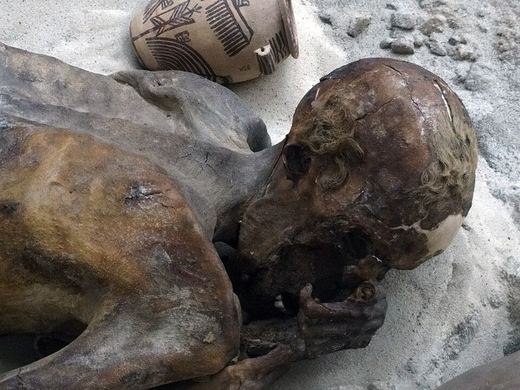
Unknown Egyptian, preserved by desert sand
Full profile below in English. 简体中文 and 繁體中文 versions are also available from the language menu.
He has no name, no inscription, no tomb goods to speak for him — only a body the desert kept. Buried in a shallow pit at Gebelein around 3500 BC, before the pyramids, before writing, the hot dry sand mummified him naturally: skin, hair, and a tattoo of animals on his shoulder, the oldest known in Africa. CT scans in 2012 found the likely cause of death — a stab wound in the back — making him both a person and a cold case 5,500 years old. The British Museum displays him with the dignity of a named king; visitors lower their voices. He is the collection's oldest resident, and its most human.
Treasures in our library (1)
Information profile — unclaimed. The artist, their estate or their institution may claim and take over this page.
Artsymus is a technology platform: we never buy, sell or hold artworks. Explanations are information from recorded open-access sources — not appraisals or professional advice — and a certificate check only confirms that a record matches; it never authenticates a work.
Artsymus is a technology platform. We never buy, sell or hold artworks — artists sell, collectors buy, we provide the technology.