The Jadeite Cabbage
Held at National Palace Museum · Taipei, Taiwan
Full explanation below in English. 简体中文 and 繁體中文 versions are also available from the language menu.
Why everyone wants to see it
A cabbage carved from a single piece of jade — flaws and all — that became the most beloved treasure of a great museum.
The story
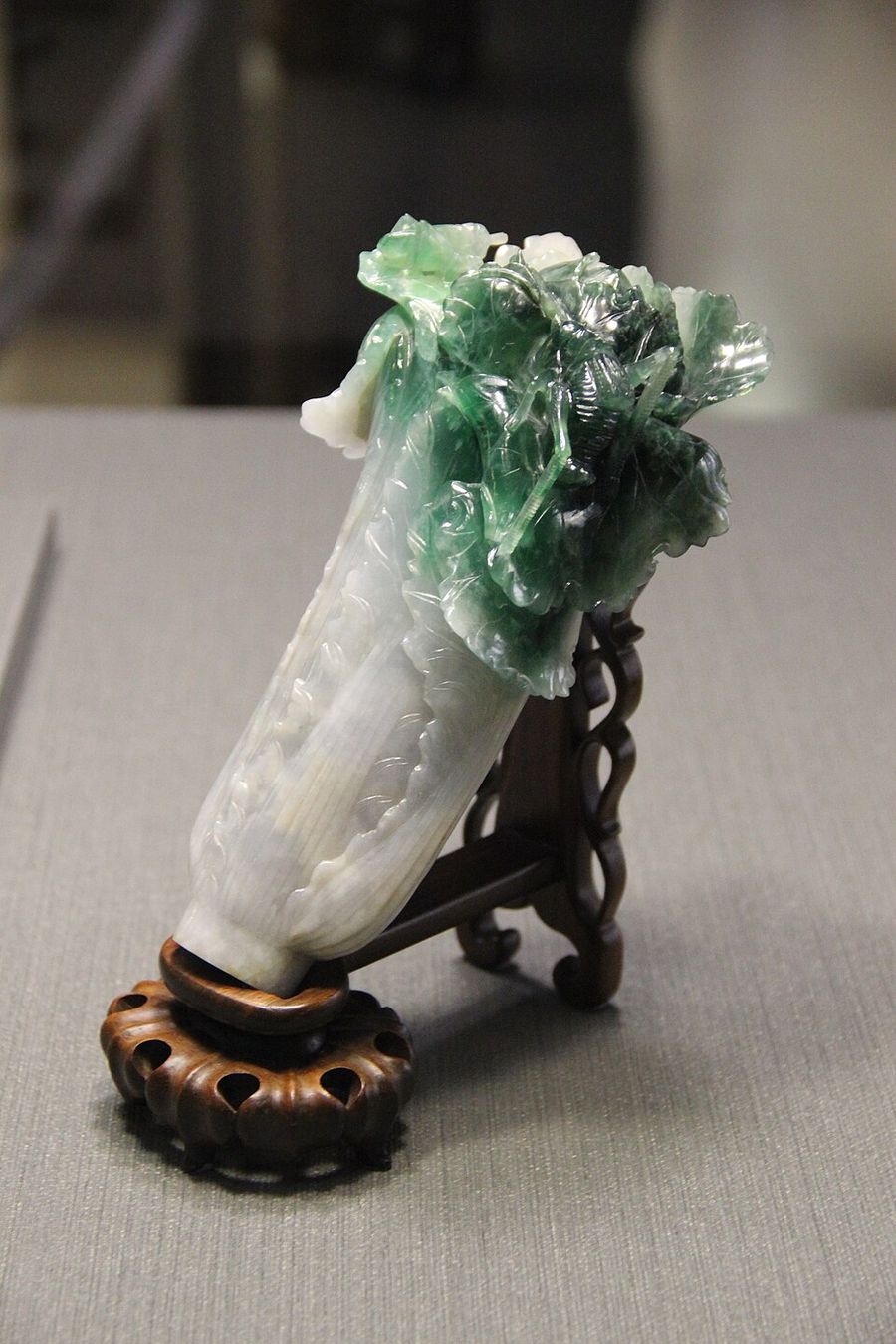
It is only 18.7 cm tall — a single bok choy cabbage, carved from a half-white, half-green piece of jadeite that lesser carvers might have rejected. The Qing dynasty palace craftsman instead read the stone like a text: the white became the crisp stalk, the green the leafy top, and natural imperfections became veins, curls and worm-nibbled edges. On the leaves he perched two insects, emblems of fertility. The cabbage is said to have belonged to the dowry of Consort Jin in the Forbidden City, where a cabbage — 'baicai' — also puns on purity and a hundred kinds of wealth. Carried to Taiwan with the palace collection, it became the National Palace Museum's most popular object, the piece visitors queue for first: proof that a masterpiece need not be large, golden or grand — only perfectly seen.
One wow fact
Look closely: two insects hide in the leaves — a grasshopper and a locust, symbols of many children. The carver turned the stone's white and green colour flaws into the cabbage's stalk and leaves.
Information page — not the museum's official page. Museums can claim and enrich this profile free of charge.
Artsymus is a technology platform: we never buy, sell or hold artworks. Explanations are information from recorded open-access sources — not appraisals or professional advice — and a certificate check only confirms that a record matches; it never authenticates a work.
Artsymus is a technology platform. We never buy, sell or hold artworks — artists sell, collectors buy, we provide the technology.