The Unicorn Tapestries
Held at The Metropolitan Museum of Art · New York, United States
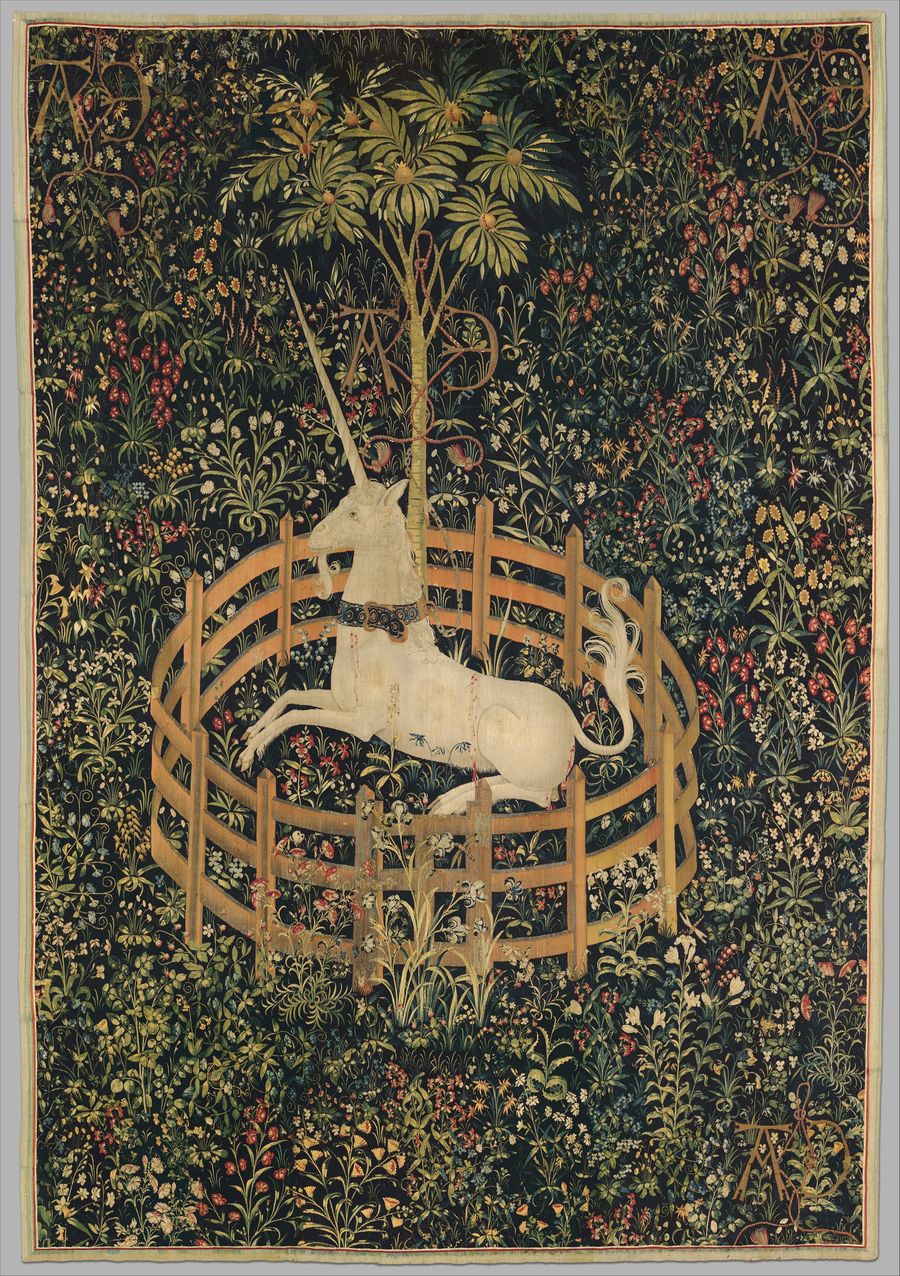
Full explanation below in English. 简体中文 and 繁體中文 versions are also available from the language menu.
Why everyone wants to see it
Seven hangings woven with silk and silver thread tell the hunt of the unicorn — medieval art's most enchanting mystery.
The story
Around 1500, in Brussels or Liège, master weavers spent years at their looms making seven tapestries of wool, silk and precious metal thread: the story of hunters pursuing a unicorn through a flower-strewn forest — finding it, fighting it, killing it, and, in the last and most famous panel, the unicorn alive again, tamed, collared, resting beneath a pomegranate tree. Is it a religious allegory, a love story, a wedding gift? The initials 'AE' woven throughout guard their secret. The tapestries hung for centuries in the Château de Verteuil of the La Rochefoucauld family, were looted in the French Revolution and recovered, and came to New York through John D. Rockefeller Jr., who built The Cloisters as their home. They remain the supreme treasure of the Met's medieval branch — a garden you can walk into, woven thread by thread.
One wow fact
More than a hundred plant species are woven into the backgrounds, and botanists have identified nearly all of them. In the final panel the unicorn, mysteriously alive again, wears a collar and rests in a garden ringed with pomegranates.
More treasures at this museum
- The Temple of Dendur The Metropolitan Museum of Art
- The Great Wave off Kanagawa The Metropolitan Museum of Art
- The Mondrian Dress The Metropolitan Museum of Art
Information page — not the museum's official page. Museums can claim and enrich this profile free of charge.
Artsymus is a technology platform: we never buy, sell or hold artworks. Explanations are information from recorded open-access sources — not appraisals or professional advice — and a certificate check only confirms that a record matches; it never authenticates a work.
Artsymus is a technology platform. We never buy, sell or hold artworks — artists sell, collectors buy, we provide the technology.