Migrant Mother
Held at The Museum of Modern Art (MoMA) · New York, United States
Why everyone wants to see it
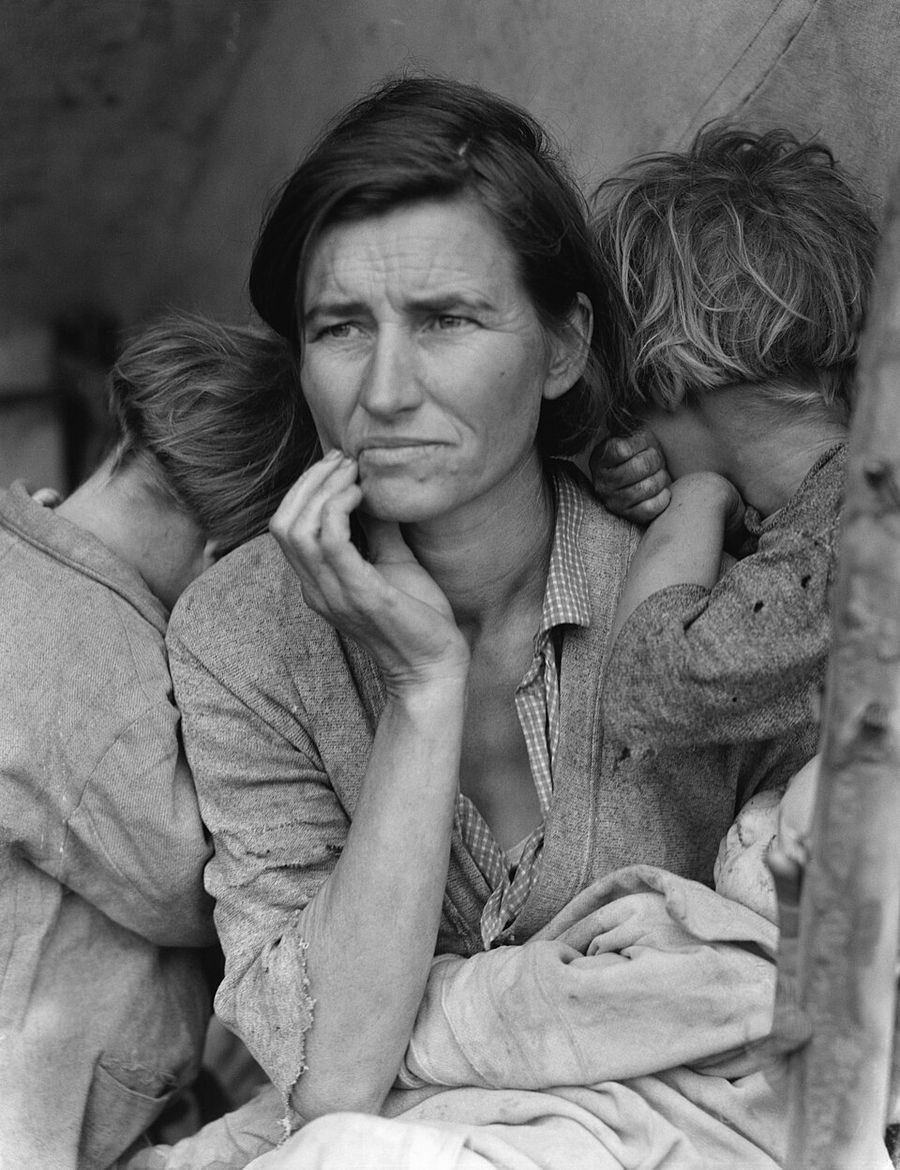
The face of the Great Depression: a mother of seven in a pea-pickers' camp, photographed in ten minutes that changed policy.
The story
In March 1936, driving home after a month photographing for the Farm Security Administration, Dorothea Lange passed a sign for a pea-pickers' camp in Nipomo, California, and — fighting her instinct to keep driving — turned in. In ten minutes she made six exposures of a woman in a tent with her children, moving closer each time; the last, chin on hand, children leaning on her shoulders and faces turned away, became the most famous documentary photograph in America. Published in the San Francisco News, it prompted emergency food aid and fixed the Depression's human face in the national mind. Lange's negative belongs to the public (Library of Congress), and prints hang in MoMA's photography galleries. The picture's afterlife — including its subject's late, ambivalent identification — still frames debates about who owns an image of suffering.
One wow fact
The sitter, Florence Owens Thompson, was identified only in 1978 — she had never been paid, and her family later said she felt exploited by the fame. When the photo was published, the government rushed 20,000 pounds of food to the camp.
More treasures at this museum
- The Starry Night The Museum of Modern Art (MoMA)
- The Sleeping Gypsy The Museum of Modern Art (MoMA)
- Eames Lounge Chair and Ottoman The Museum of Modern Art (MoMA)
- Barcelona Chair The Museum of Modern Art (MoMA)
- Juicy Salif Lemon Squeezer The Museum of Modern Art (MoMA)
- Red Blue Chair The Museum of Modern Art (MoMA)
Same culture · United States
- American Gothic Art Institute of Chicago
- Eames Lounge Chair and Ottoman The Museum of Modern Art (MoMA)
Information page — not the museum's official page. Museums can claim and enrich this profile free of charge.
Artsymus is a technology platform: we never buy, sell or hold artworks. Explanations are information from recorded open-access sources — not appraisals or professional advice — and a certificate check only confirms that a record matches; it never authenticates a work.
Artsymus is a technology platform. We never buy, sell or hold artworks — artists sell, collectors buy, we provide the technology.