The Sistine Chapel Ceiling
Held at Vatican Museums · Vatican City, Vatican City
Why everyone wants to see it
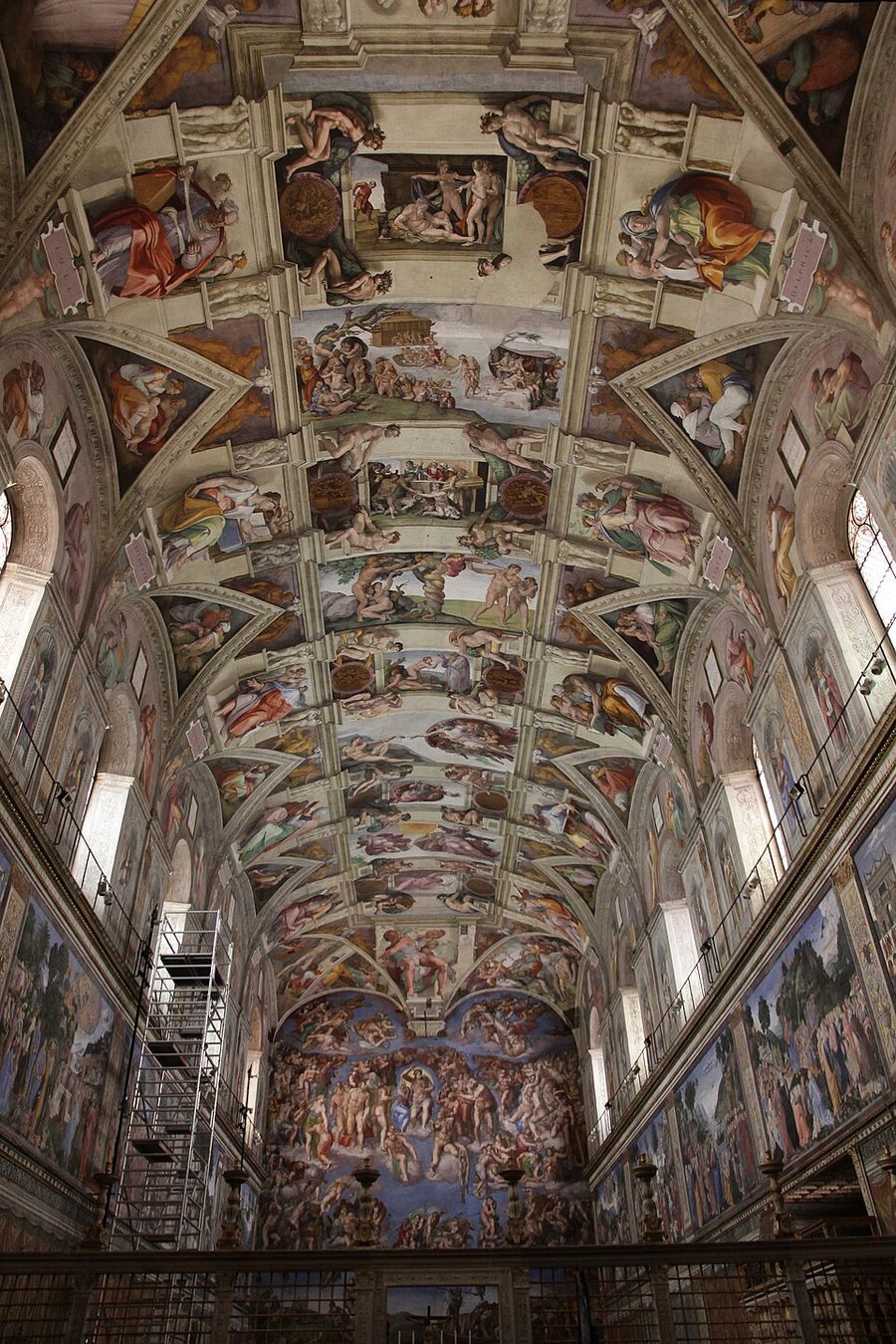
Over 300 figures painted lying on a scaffold — including the most famous touch in art: God's finger reaching for Adam's.
The story
Pope Julius II ordered Michelangelo — a sculptor, as he kept protesting — to paint the ceiling of the papal chapel in the Vatican. From 1508 to 1512, working on a scaffold of his own design, head bent back, paint dripping into his eyes, he covered 500 square metres with the story of Genesis: the creation of light, of Adam, of Eve, the Flood, framed by prophets, sibyls and ignudi of superhuman beauty. The central panel, The Creation of Adam, distils the whole Renaissance into one near-touch between divine energy and human languor. When the ceiling was unveiled on All Saints' Day 1512, Rome understood at once that painting had changed forever. Twenty years later Michelangelo returned to paint The Last Judgment on the altar wall. The chapel still elects popes beneath his frescoes — and receives some twenty thousand visitors a day.
One wow fact
Michelangelo considered himself a sculptor and took the job reluctantly, designing his own scaffold. In 'The Creation of Adam', the two fingers famously do not quite touch — the tiny gap is the most reproduced detail in Western art.
More treasures at this museum
- The School of Athens Vatican Museums
Same culture · Renaissance Europe
- Mona Lisa Musée du Louvre
- The Birth of Venus Uffizi Galleries
- David Galleria dell'Accademia
- The Garden of Earthly Delights Museo del Prado
- The School of Athens Vatican Museums
- The Arnolfini Portrait National Gallery
Information page — not the museum's official page. Museums can claim and enrich this profile free of charge.
Artsymus is a technology platform: we never buy, sell or hold artworks. Explanations are information from recorded open-access sources — not appraisals or professional advice — and a certificate check only confirms that a record matches; it never authenticates a work.
Artsymus is a technology platform. We never buy, sell or hold artworks — artists sell, collectors buy, we provide the technology.