The Arnolfini Portrait
Held at National Gallery · London, United Kingdom
Full explanation below in English. 简体中文 and 繁體中文 versions are also available from the language menu.
Why everyone wants to see it
A wedding? A memorial? A legal document in paint? The most debated small painting in art history.
The story
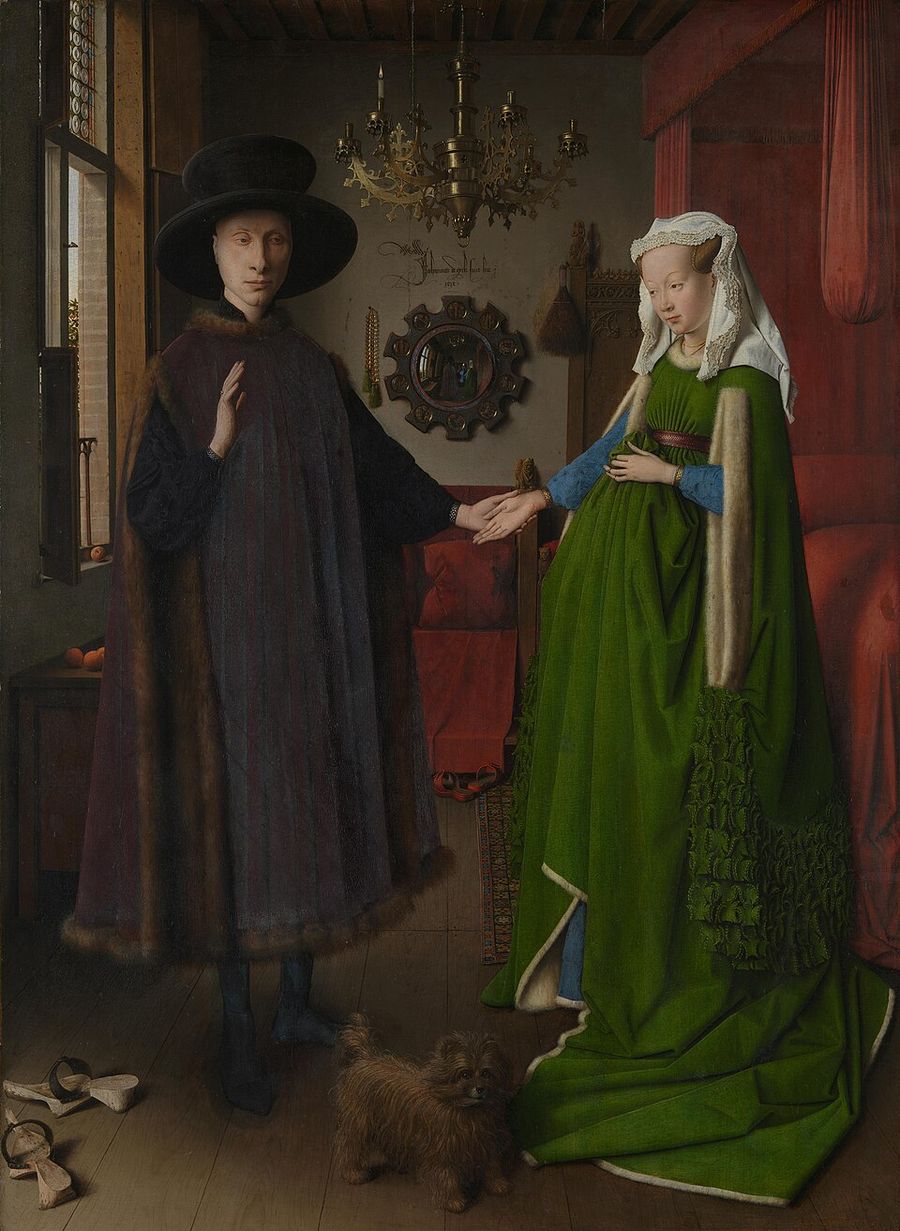
In a Bruges bedchamber in 1434, Giovanni Arnolfini, an Italian merchant banker, stands with his wife, his right hand raised, hers resting on her swollen-looking drapery — a pose of fashion, not pregnancy, scholars now say. Around them every object gleams with possible meaning: a little dog for fidelity, discarded shoes for holy ground, a single candle burning in daylight, oranges for wealth from the south. Jan van Eyck, pioneer of oil painting, renders each surface — fur, brass, glass, fruit — with microscopic devotion, and signs the wall like a witness. Was it a marriage certificate, a memorial to a wife already dead, or simply a portrait of power? The debate has run for a century and made this small panel, in London's National Gallery, one of the most written-about paintings in the world.
One wow fact
In the mirror on the back wall, the whole room is reflected — including two extra men entering. Above it Van Eyck wrote in Latin, like a signature on a legal deed: 'Jan van Eyck was here, 1434.'
More treasures at this museum
- Sunflowers National Gallery
Same culture · Renaissance Europe
- Mona Lisa Musée du Louvre
- The Birth of Venus Uffizi Galleries
- David Galleria dell'Accademia
- The Sistine Chapel Ceiling Vatican Museums
- The Garden of Earthly Delights Museo del Prado
- The School of Athens Vatican Museums
Information page — not the museum's official page. Museums can claim and enrich this profile free of charge.
Artsymus is a technology platform: we never buy, sell or hold artworks. Explanations are information from recorded open-access sources — not appraisals or professional advice — and a certificate check only confirms that a record matches; it never authenticates a work.
Artsymus is a technology platform. We never buy, sell or hold artworks — artists sell, collectors buy, we provide the technology.