Eames Lounge Chair and Ottoman
Held at The Museum of Modern Art (MoMA) · New York, United States
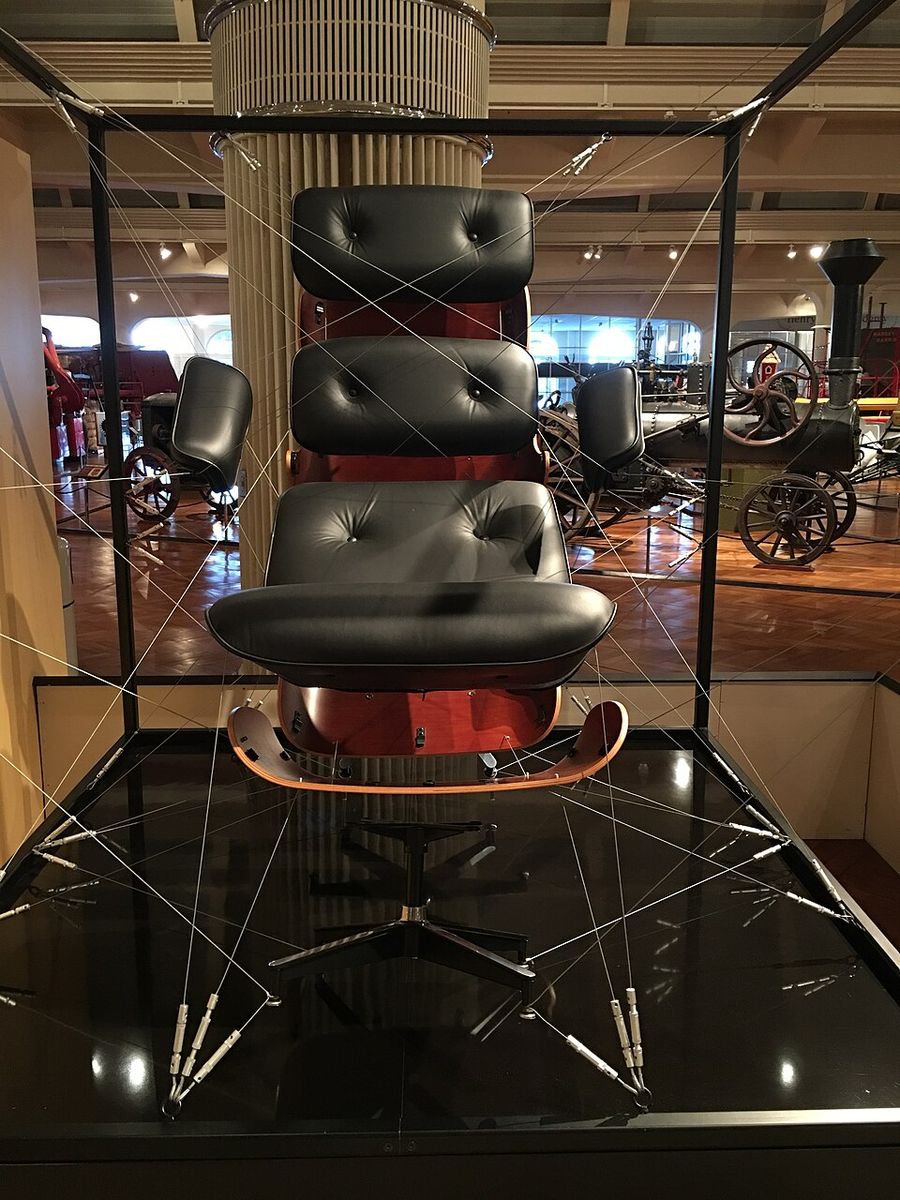
Full explanation below in English. 简体中文 and 繁體中文 versions are also available from the language menu.
Why everyone wants to see it
The chair that made modern design luxurious: moulded rosewood shells and leather soft as a first baseman's mitt.
The story
Charles and Ray Eames — the husband-and-wife team who defined mid-century American design — set out in the 1950s to update the English club chair with the techniques they had pioneered moulding plywood for wartime splints and their famous LCW chairs. The result, launched by Herman Miller in 1956, joined three sculpted rosewood-veneered shells, cushions of glove-soft leather, and cast aluminium — industrial materials arranged with a jeweller's care. It was modernism you could sink into. The Eameses' studio gave the first production sets to friends including Billy Wilder and Georgia O'Keeffe; within a generation the chair signified taste in offices and films worldwide. MoMA collected it early and shows it as what it is: the moment American design stopped choosing between comfort and modernity, and chose both.
One wow fact
Charles Eames said he wanted the chair to have 'the warm, receptive look of a well-used first baseman's mitt'. It debuted on American television in 1956 and has been in continuous production ever since — and in MoMA's collection almost as long.
More treasures at this museum
- The Starry Night The Museum of Modern Art (MoMA)
- The Sleeping Gypsy The Museum of Modern Art (MoMA)
- Barcelona Chair The Museum of Modern Art (MoMA)
- Juicy Salif Lemon Squeezer The Museum of Modern Art (MoMA)
- Red Blue Chair The Museum of Modern Art (MoMA)
- Migrant Mother The Museum of Modern Art (MoMA)
Same culture · United States
- American Gothic Art Institute of Chicago
- Migrant Mother The Museum of Modern Art (MoMA)
Information page — not the museum's official page. Museums can claim and enrich this profile free of charge.
Artsymus is a technology platform: we never buy, sell or hold artworks. Explanations are information from recorded open-access sources — not appraisals or professional advice — and a certificate check only confirms that a record matches; it never authenticates a work.
Artsymus is a technology platform. We never buy, sell or hold artworks — artists sell, collectors buy, we provide the technology.