Juicy Salif Lemon Squeezer
Held at The Museum of Modern Art (MoMA) · New York, United States
Full explanation below in English. 简体中文 and 繁體中文 versions are also available from the language menu.
Why everyone wants to see it
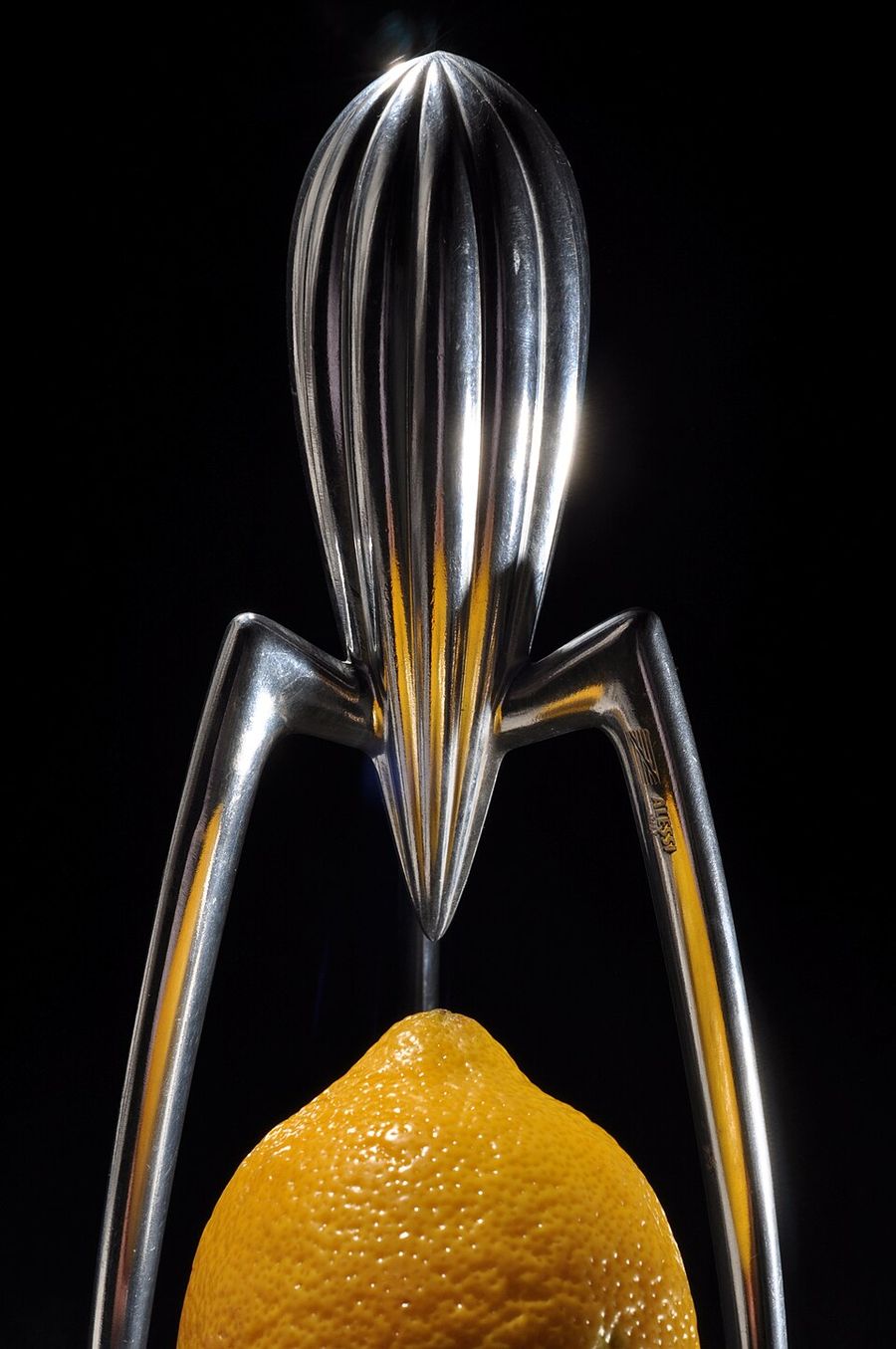
A lemon squeezer that looks like a squid-rocket — design's most famous conversation piece, sketched on a restaurant napkin.
The story
In 1990 the Italian houseware firm Alessi released Philippe Starck's Juicy Salif: three long legs, a teardrop body, a pointed crown — cast aluminium standing 29 centimetres tall, part squid, part rocket, part lemon squeezer. Critics divided instantly: was it genius or a prank? Owners discovered it dribbles and cannot be dishwashed (the acid dulls it), yet it sold in the millions and entered design collections including MoMA's, where it stands for a turning point: postmodern design arguing that an object's job includes delight, symbolism and talk, not function alone. Starck himself framed it as a piece of sculpture for the kitchen counter — a 'social object'. Three decades on, it remains the test case every design student must have an opinion about.
One wow fact
Starck said the idea came while squeezing lemon over calamari in an Italian restaurant. Alessi's Alberto Alessi cheerfully admits it is not the best juicer — it is a conversation starter, 'a joke' that became a bestseller and a museum icon.
More treasures at this museum
- The Starry Night The Museum of Modern Art (MoMA)
- The Sleeping Gypsy The Museum of Modern Art (MoMA)
- Eames Lounge Chair and Ottoman The Museum of Modern Art (MoMA)
- Barcelona Chair The Museum of Modern Art (MoMA)
- Red Blue Chair The Museum of Modern Art (MoMA)
- Migrant Mother The Museum of Modern Art (MoMA)
Same culture · Modern Europe
- The Starry Night The Museum of Modern Art (MoMA)
- The Thinker Musée Rodin
- The Scream National Museum
- Sunflowers National Gallery
- Liberty Leading the People Musée du Louvre
- Impression, Sunrise Musée Marmottan Monet
Information page — not the museum's official page. Museums can claim and enrich this profile free of charge.
Artsymus is a technology platform: we never buy, sell or hold artworks. Explanations are information from recorded open-access sources — not appraisals or professional advice — and a certificate check only confirms that a record matches; it never authenticates a work.
Artsymus is a technology platform. We never buy, sell or hold artworks — artists sell, collectors buy, we provide the technology.