Alexandros of Antioch (attributed)
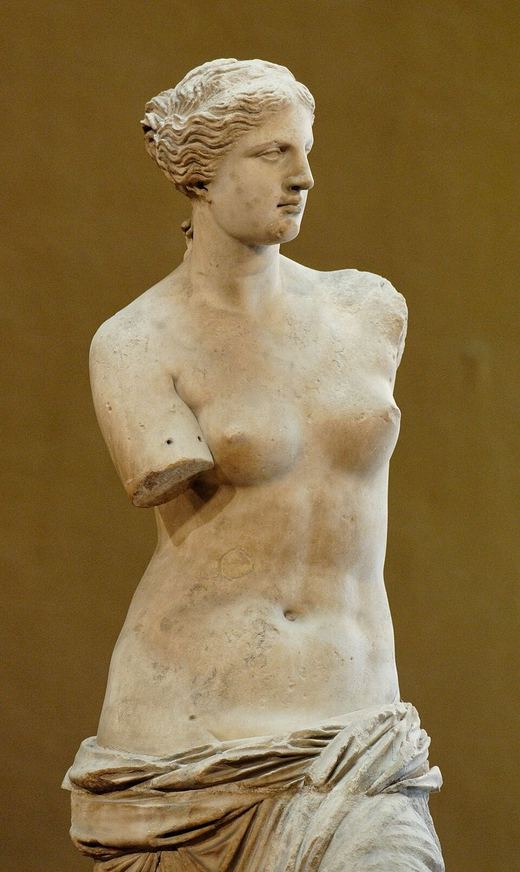
A signature on a lost plinth is all we have: 'Alexandros of Magnesia-on-the-Meander made this' — the base found with the Venus de Milo on Melos in 1820 and later separated from the statue, to the Louvre's embarrassment. The sculptor, probably from Antioch's orbit in the late Hellenistic world, carved a goddess twisting in contrapposto, her drapery slipping at the hips, in the revived classical style his age loved. The missing arms made her the most famous torso in art and the test case of every theory of beauty: Praxiteles reborn, said some; a brilliant pastiche, said others. Alexandros, whoever he was, achieved what few named artists ever do — a single work that defines an ideal for millennia.
Treasures in our library (1)
Information profile — unclaimed. The artist, their estate or their institution may claim and take over this page.
Artsymus is a technology platform: we never buy, sell or hold artworks. Explanations are information from recorded open-access sources — not appraisals or professional advice — and a certificate check only confirms that a record matches; it never authenticates a work.
Artsymus is a technology platform. We never buy, sell or hold artworks — artists sell, collectors buy, we provide the technology.