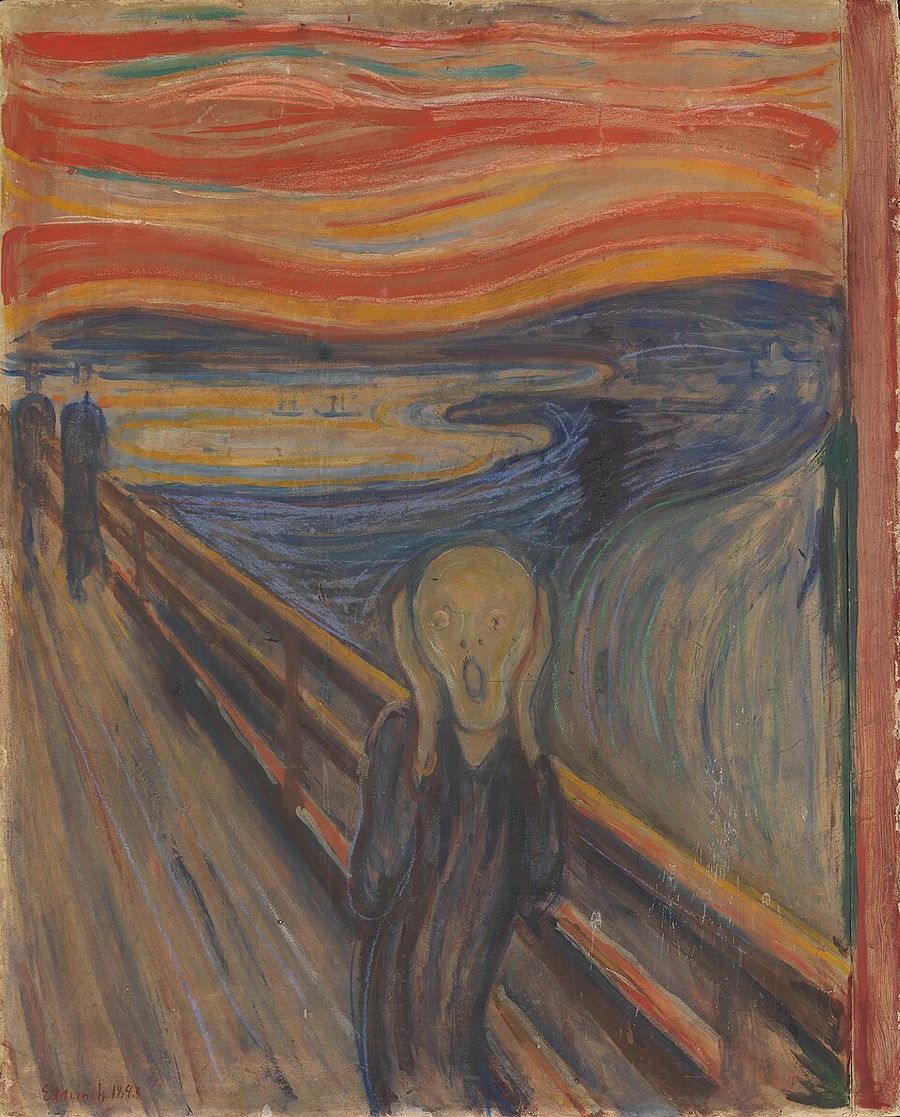
The Scream
Held at National Museum · Oslo, Norway
Why everyone wants to see it
Anxiety given a face — the image the whole world uses for modern dread.
The story
'I felt a great unending scream piercing through nature.' Walking on a bridge over Oslo fjord at sunset, Edvard Munch — frail, anxious, haunted by illness and loss in his family — experienced a moment of existential panic and turned it into this: a sexless figure clutching its face, mouth open in an oval of horror, while the landscape itself seems to vibrate with the sound. Painted in 1893, the version in Norway's National Museum is executed in oil, tempera and pastel on cardboard — fragile materials for an image of iron cultural strength. Two of the four versions have been stolen and recovered, adding real drama to painted dread. Reduced to an emoji, a mask, a movie reference, The Scream is one of very few artworks that truly everyone recognises.
One wow fact
Munch made four versions. One sold at auction in 2012 for nearly $120 million, then a record for any artwork. The blood-red sky may record the real sunsets after the Krakatoa eruption, which stained skies worldwide for years.
Same culture · Modern Europe
- The Starry Night The Museum of Modern Art (MoMA)
- The Thinker Musée Rodin
- Sunflowers National Gallery
- Liberty Leading the People Musée du Louvre
- Impression, Sunrise Musée Marmottan Monet
- Wanderer above the Sea of Fog Hamburger Kunsthalle
Information page — not the museum's official page. Museums can claim and enrich this profile free of charge.
Artsymus is a technology platform: we never buy, sell or hold artworks. Explanations are information from recorded open-access sources — not appraisals or professional advice — and a certificate check only confirms that a record matches; it never authenticates a work.
Artsymus is a technology platform. We never buy, sell or hold artworks — artists sell, collectors buy, we provide the technology.