Wanderer above the Sea of Fog
Held at Hamburger Kunsthalle · Hamburg, Germany
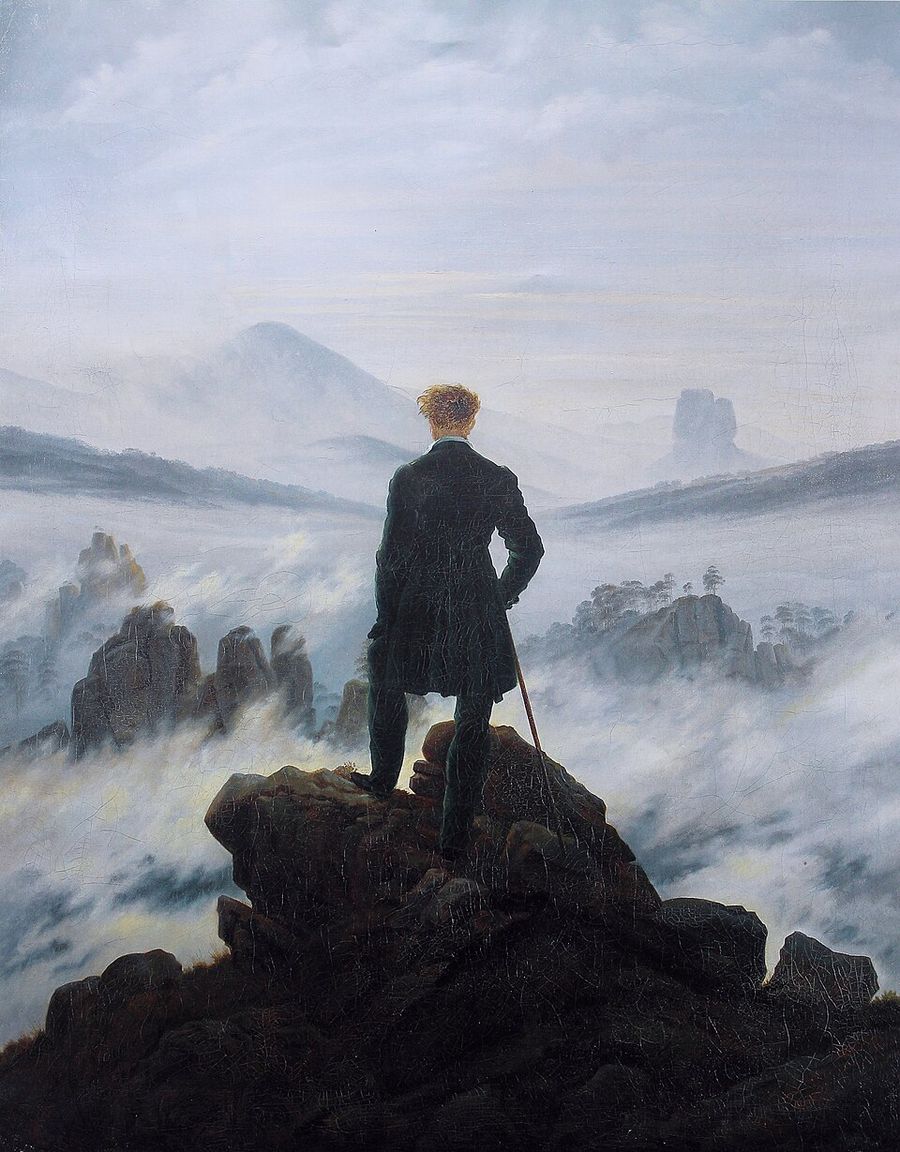
Why everyone wants to see it
A man in a tailcoat on a rocky summit, facing an ocean of cloud — Romanticism's poster image, endlessly remixed.
The story
Around 1818 Caspar David Friedrich, the great painter of German Romanticism, composed his most famous image from studies made in the Elbe Sandstone Mountains: a gentleman in city clothes, walking stick in hand, stands on a crag above a sea of mist from which dark peaks rise like islands. Is he triumphant over nature, or dwarfed by it? Friedrich leaves the question open — that openness is the point. Painted in the introspective years after the Napoleonic Wars, the Wanderer became a symbol of the modern soul confronting the sublime: alone, thoughtful, small and exalted at once. The painting hangs in the Hamburger Kunsthalle, and its silhouette has wandered far beyond the museum — into book covers, album art and a thousand internet variations, each new wanderer standing in for whoever looks.
One wow fact
We never see his face. Friedrich's trick — the figure seen from behind, called a Rückenfigur — makes the wanderer a stand-in for you: his awe is yours. The peaks below echo real Saxon mountains Friedrich sketched on hikes.
Same culture · Modern Europe
- The Starry Night The Museum of Modern Art (MoMA)
- The Thinker Musée Rodin
- The Scream National Museum
- Sunflowers National Gallery
- Liberty Leading the People Musée du Louvre
- Impression, Sunrise Musée Marmottan Monet
Information page — not the museum's official page. Museums can claim and enrich this profile free of charge.
Artsymus is a technology platform: we never buy, sell or hold artworks. Explanations are information from recorded open-access sources — not appraisals or professional advice — and a certificate check only confirms that a record matches; it never authenticates a work.
Artsymus is a technology platform. We never buy, sell or hold artworks — artists sell, collectors buy, we provide the technology.