The Water Lilies of the Orangerie
Held at Musée de l'Orangerie · Paris, France
Why everyone wants to see it
Two oval rooms wrapped in Monet's water garden — painting you stand inside, donated to France as a monument to peace.
The story
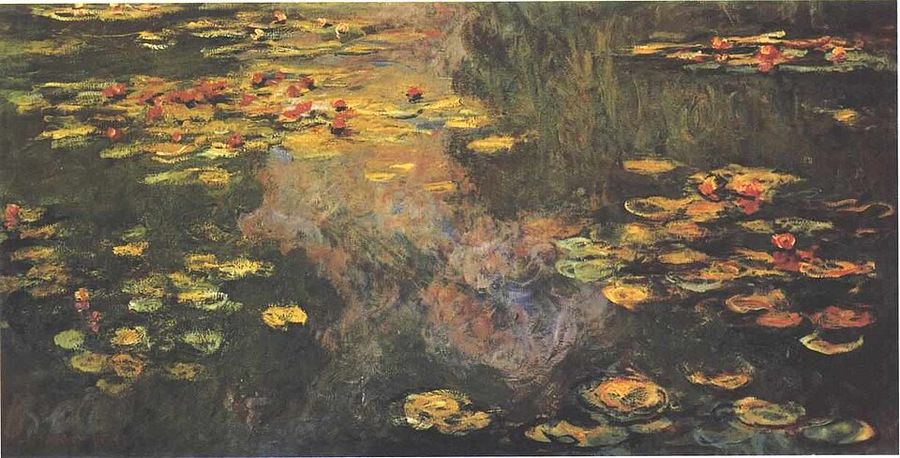
The day after the Armistice in 1918, Claude Monet wrote to the French prime minister offering two great paintings 'as a monument to peace'. The gift grew into eight immense panels of his Giverny water garden — morning and evening, willows and clouds, reflections without horizon — installed in 1927, months after his death, in two oval rooms of the Orangerie in the Tuileries Garden. There is no frame, no single viewpoint: the lilies surround you at eye level, the water's surface becomes the whole world, painted by an old man who was losing his sight and painting light itself. Monet called them his 'water mirrors'. In a city of masterpieces, these two quiet rooms remain the most meditative space in Paris — the culmination of Impressionism, half a century after a sneering critic gave it its name.
One wow fact
Monet, nearly blind with cataracts, painted these vast panels in his eighties. He stipulated the rooms' oval shape and natural light — visitors still experience them exactly as he planned, in silence he asked them to keep.
Same culture · Modern Europe
- The Starry Night The Museum of Modern Art (MoMA)
- The Thinker Musée Rodin
- The Scream National Museum
- Sunflowers National Gallery
- Liberty Leading the People Musée du Louvre
- Impression, Sunrise Musée Marmottan Monet
Information page — not the museum's official page. Museums can claim and enrich this profile free of charge.
Artsymus is a technology platform: we never buy, sell or hold artworks. Explanations are information from recorded open-access sources — not appraisals or professional advice — and a certificate check only confirms that a record matches; it never authenticates a work.
Artsymus is a technology platform. We never buy, sell or hold artworks — artists sell, collectors buy, we provide the technology.