The Benin Bronzes
Held at British Museum · London, United Kingdom
Full explanation below in English. 简体中文 and 繁體中文 versions are also available from the language menu.
Why everyone wants to see it
Plaques and heads of astonishing skill from a West African royal court — and the centre of the world's restitution debate.
The story
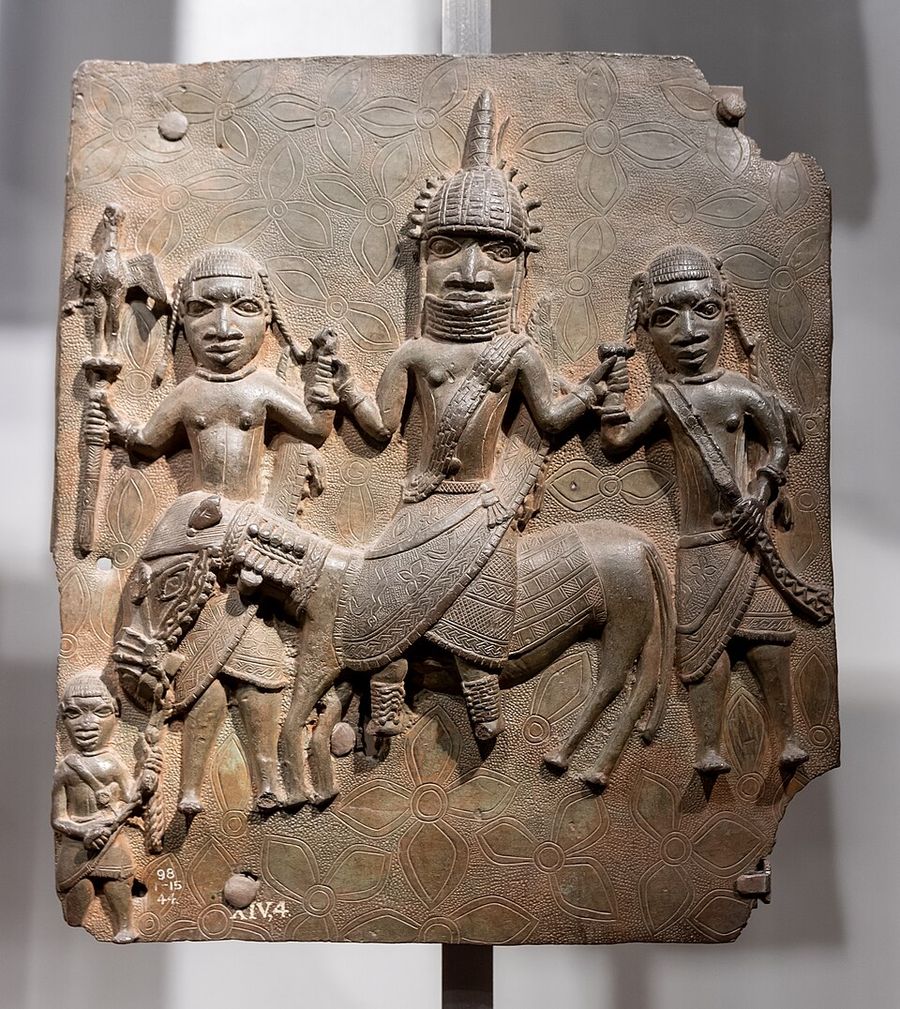
For centuries the Oba (king) of Benin, in today's Nigeria, employed guilds of bronze casters whose plaques, heads and figures recorded the court's history in metal of superb refinement. In 1897 a British punitive expedition sacked Benin City and carried off thousands of these works, which were sold to museums across Europe and America to defray the expedition's costs. The British Museum holds one of the largest groups — around 900 objects. Their artistry is beyond dispute; so, increasingly, is Nigeria's claim to them. In recent years museums in Germany, France, the US and Britain have begun returning Benin works, and the British Museum — legally constrained by its founding act — lends and negotiates while the debate continues. Few objects make visitors think harder about how museums were made, and what they are for.
One wow fact
The plaques once covered the wooden pillars of the Oba's palace in Benin City — a metal chronicle of court life. Benin's casters used the lost-wax method for centuries, producing work European experts at first refused to believe was African-made.
More treasures at this museum
- The Rosetta Stone British Museum
- The Gebelein Mummy, known as “Ginger” British Museum
- The Papyrus of Ani — the Book of the Dead British Museum
- The Parthenon Sculptures British Museum
- Hoa Hakananai'a — the Easter Island Moai British Museum
- The Sutton Hoo Helmet British Museum
Information page — not the museum's official page. Museums can claim and enrich this profile free of charge.
Artsymus is a technology platform: we never buy, sell or hold artworks. Explanations are information from recorded open-access sources — not appraisals or professional advice — and a certificate check only confirms that a record matches; it never authenticates a work.
Artsymus is a technology platform. We never buy, sell or hold artworks — artists sell, collectors buy, we provide the technology.