Hoa Hakananai'a — the Easter Island Moai
Held at British Museum · London, United Kingdom
Full explanation below in English. 简体中文 and 繁體中文 versions are also available from the language menu.
Why everyone wants to see it
A stolen friend: the moai whose name means 'stolen or hidden friend', claimed back by Rapa Nui with growing passion.
The story
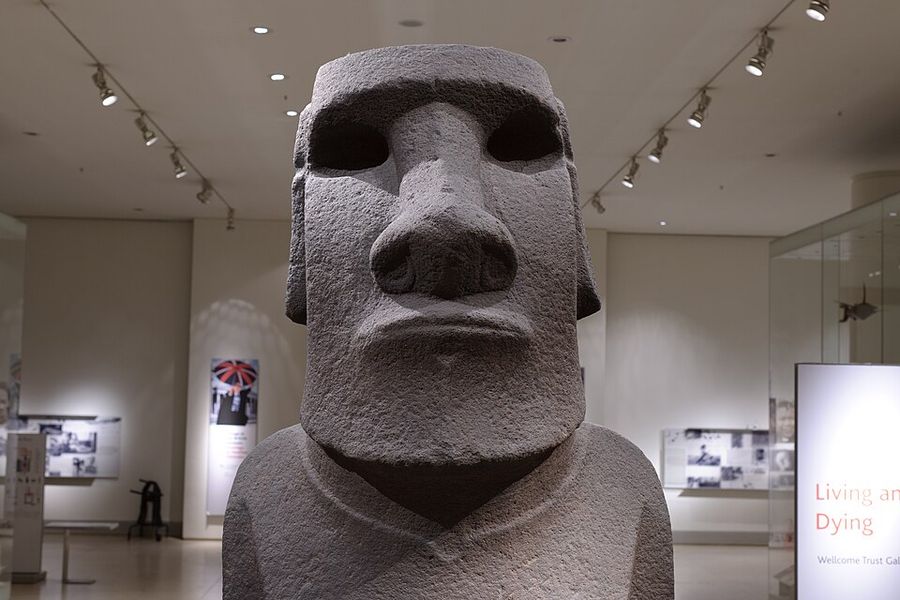
The moai of Rapa Nui (Easter Island) are among the most recognisable sculptures on Earth: great ancestor figures raised on ceremonial platforms by Polynesian voyagers on one of the most remote inhabited islands in the world. This basalt statue, about 2.4 metres tall, is special — smaller and finer than most, carved with a second layer of sacred imagery from the island's later birdman religion. In 1868 the crew of HMS Topaze took him from the village of Orongo and presented him to Queen Victoria, who gave him to the British Museum. His name, Hoa Hakananai'a, is often translated 'stolen friend' or 'hidden friend'. For the Rapa Nui people he is not an exhibit but an ancestor with a soul, and their campaign for his return has become a touchstone of the global restitution movement. He stands today in the museum's Wellcome Gallery, watched by millions, missed at home.
One wow fact
His back is covered with later carvings — birdman cult figures, ceremonial paddles and vulva symbols — a second sacred text added after he was moved into a ceremonial house. In 2018 the governor of Rapa Nui formally asked, in tears, for his return.
More treasures at this museum
- The Rosetta Stone British Museum
- The Gebelein Mummy, known as “Ginger” British Museum
- The Papyrus of Ani — the Book of the Dead British Museum
- The Parthenon Sculptures British Museum
- The Benin Bronzes British Museum
- The Sutton Hoo Helmet British Museum
Information page — not the museum's official page. Museums can claim and enrich this profile free of charge.
Artsymus is a technology platform: we never buy, sell or hold artworks. Explanations are information from recorded open-access sources — not appraisals or professional advice — and a certificate check only confirms that a record matches; it never authenticates a work.
Artsymus is a technology platform. We never buy, sell or hold artworks — artists sell, collectors buy, we provide the technology.