The Rosetta Stone
Held at British Museum · London, United Kingdom
Full explanation below in English. 简体中文 and 繁體中文 versions are also available from the language menu.
Why everyone wants to see it
The stone that taught the modern world to read Egyptian hieroglyphs.
The story
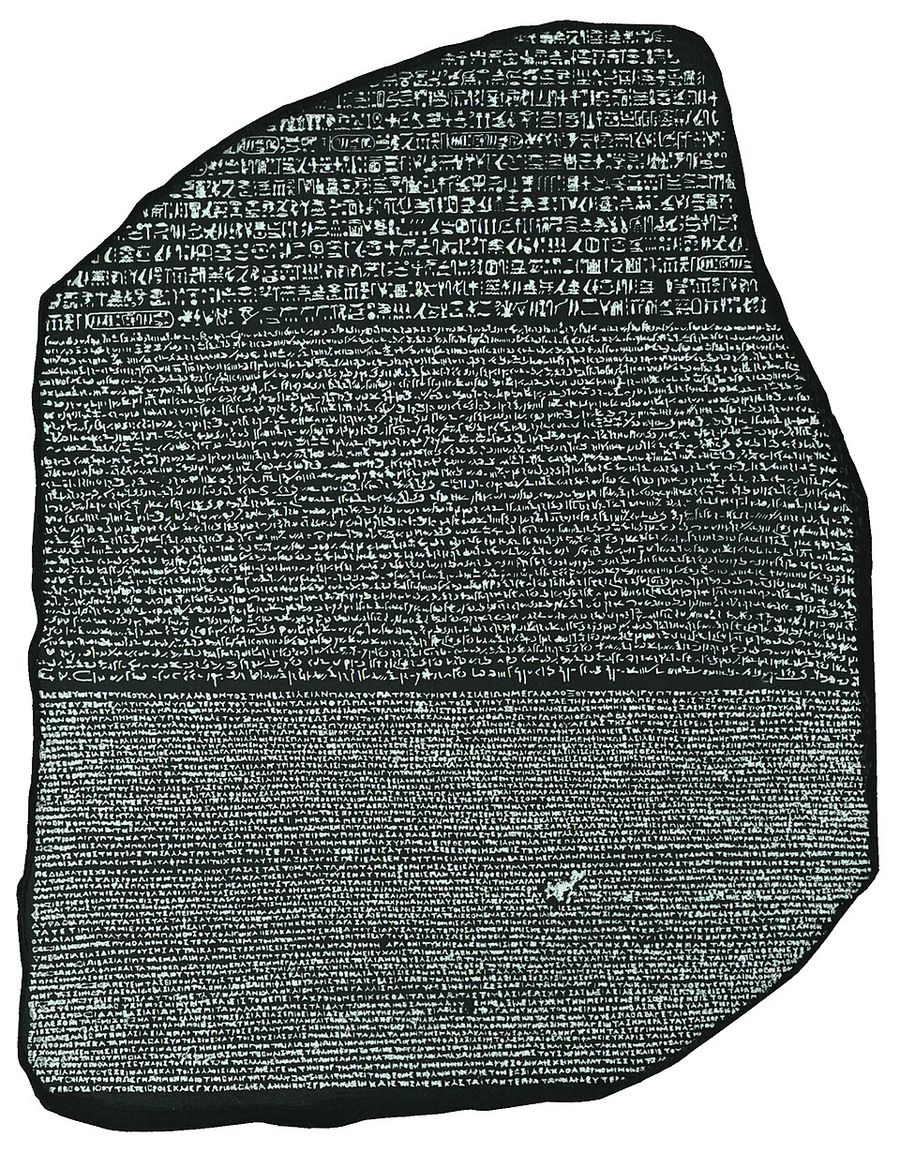
In 196 BC, priests in Memphis issued a decree honouring the young pharaoh Ptolemy V. Like all official texts of the time, it was carved three times: in hieroglyphs for the gods, in demotic script for daily life, and in Greek for the rulers. The stone was later reused as building material in a Nile Delta fort, where French soldiers dug it up in 1799. Scholars raced to decode it, comparing the Greek text against the mysterious picture-writing. In 1822 Jean-François Champollion cracked the system, realising hieroglyphs recorded sound as well as meaning. Suddenly three thousand years of Egyptian writing — temple walls, tomb texts, royal decrees — could speak again. The stone has been the British Museum's most famous object since 1802, and 'Rosetta Stone' has become a worldwide metaphor for the key that unlocks a mystery.
One wow fact
The same decree is carved three times on one stone — in hieroglyphs, in everyday Egyptian script, and in Greek. The Greek was the key that unlocked the other two.
More treasures at this museum
- The Gebelein Mummy, known as “Ginger” British Museum
- The Papyrus of Ani — the Book of the Dead British Museum
- The Parthenon Sculptures British Museum
- The Benin Bronzes British Museum
- Hoa Hakananai'a — the Easter Island Moai British Museum
- The Sutton Hoo Helmet British Museum
Same culture · Ancient Egypt
- The Gebelein Mummy, known as “Ginger” British Museum
- The Papyrus of Ani — the Book of the Dead British Museum
- The Gold Mask of Tutankhamun Grand Egyptian Museum
- Khufu's Solar Boat Grand Egyptian Museum
- The Bust of Nefertiti Neues Museum
- The Temple of Dendur The Metropolitan Museum of Art
Information page — not the museum's official page. Museums can claim and enrich this profile free of charge.
Artsymus is a technology platform: we never buy, sell or hold artworks. Explanations are information from recorded open-access sources — not appraisals or professional advice — and a certificate check only confirms that a record matches; it never authenticates a work.
Artsymus is a technology platform. We never buy, sell or hold artworks — artists sell, collectors buy, we provide the technology.