The Gold Mask of Tutankhamun
Held at Grand Egyptian Museum · Giza, Egypt
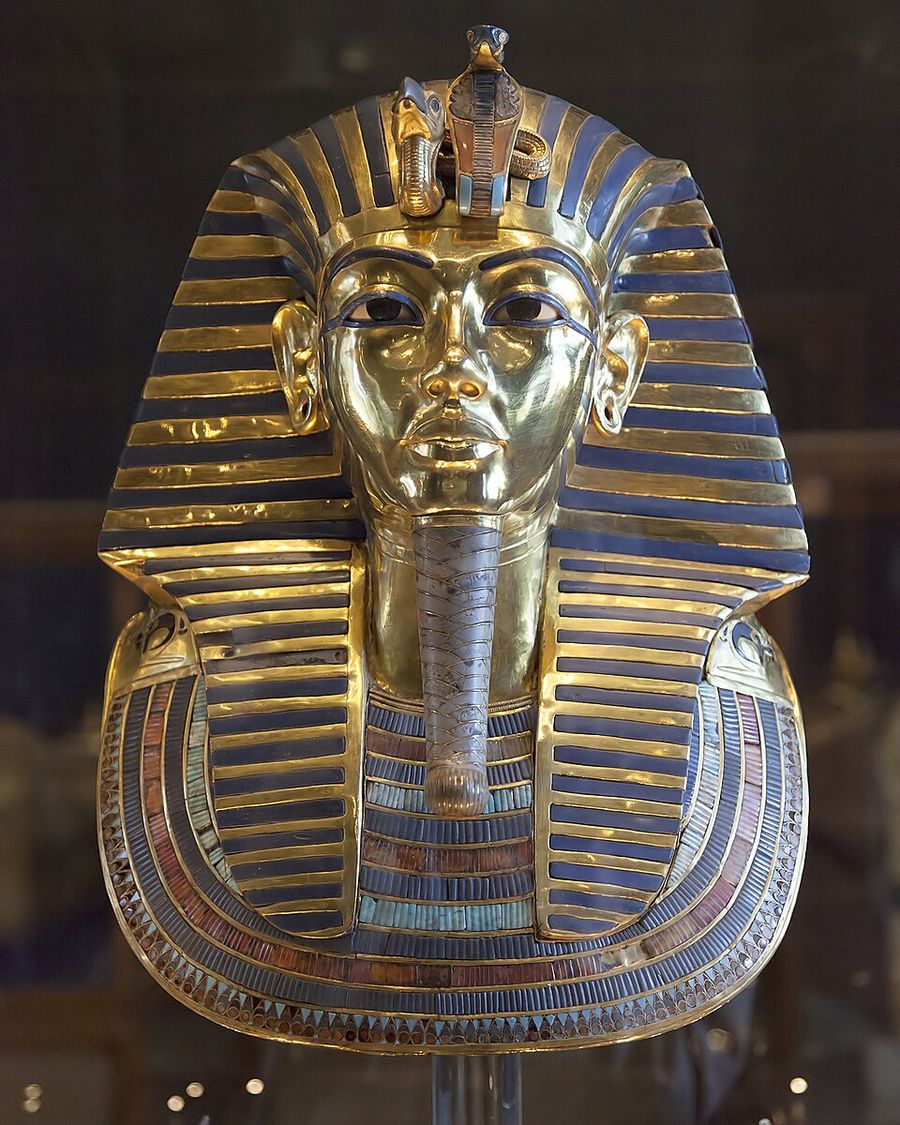
Why everyone wants to see it
The face of the boy king — the single most famous treasure ever pulled from an ancient tomb.
The story
When Howard Carter peered into Tutankhamun's tomb in 1922 and saw 'wonderful things', the greatest of them waited in the burial chamber: a solid gold mask resting on the mummy of the boy king himself. Beaten from two sheets of gold and inlaid with lapis lazuli, turquoise, obsidian and coloured glass, it shows the pharaoh as calm, divine and eternally young — striped nemes headdress, ceremonial beard, and eyes that seem to follow you. Tutankhamun died at about nineteen, a minor king of a short reign; it was his almost-intact tomb, unique in the Valley of the Kings, that made him the most famous pharaoh of all. The mask is now the centrepiece of the Grand Egyptian Museum near the Giza pyramids, where the entire Tutankhamun collection — more than 5,000 objects — is displayed together for the first time.
One wow fact
The mask weighs about 11 kilograms of solid gold and inlay. For decades scholars thought its beard had been knocked off and glued back on in secret — the museum later admitted the repair openly.
More treasures at this museum
- Khufu's Solar Boat Grand Egyptian Museum
Same culture · Ancient Egypt
- The Rosetta Stone British Museum
- The Gebelein Mummy, known as “Ginger” British Museum
- The Papyrus of Ani — the Book of the Dead British Museum
- Khufu's Solar Boat Grand Egyptian Museum
- The Bust of Nefertiti Neues Museum
- The Temple of Dendur The Metropolitan Museum of Art
Information page — not the museum's official page. Museums can claim and enrich this profile free of charge.
Artsymus is a technology platform: we never buy, sell or hold artworks. Explanations are information from recorded open-access sources — not appraisals or professional advice — and a certificate check only confirms that a record matches; it never authenticates a work.
Artsymus is a technology platform. We never buy, sell or hold artworks — artists sell, collectors buy, we provide the technology.