The Rosetta Stone
Held at British Museum · London, United Kingdom
Why everyone wants to see it
The stone that taught the modern world to read Egyptian hieroglyphs.
The story
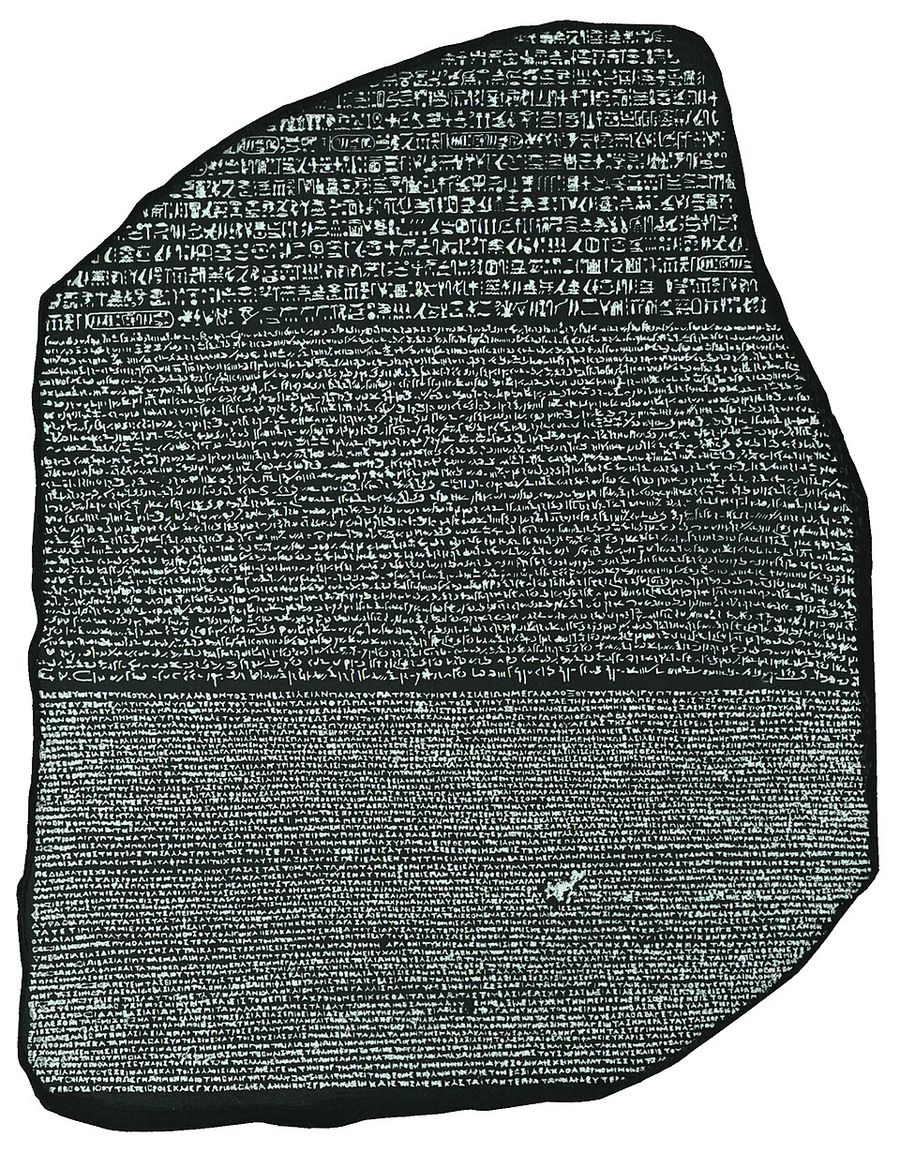
In 196 BC, priests in Memphis issued a decree honouring the young pharaoh Ptolemy V. Like all official texts of the time, it was carved three times: in hieroglyphs for the gods, in demotic script for daily life, and in Greek for the rulers. The stone was later reused as building material in a Nile Delta fort, where French soldiers dug it up in 1799. Scholars raced to decode it, comparing the Greek text against the mysterious picture-writing. In 1822 Jean-François Champollion cracked the system, realising hieroglyphs recorded sound as well as meaning. Suddenly three thousand years of Egyptian writing — temple walls, tomb texts, royal decrees — could speak again. The stone has been the British Museum's most famous object since 1802, and 'Rosetta Stone' has become a worldwide metaphor for the key that unlocks a mystery.
One wow fact
The same decree is carved three times on one stone — in hieroglyphs, in everyday Egyptian script, and in Greek. The Greek was the key that unlocked the other two.
More treasures at this museum
- The Gebelein Mummy, known as “Ginger” British Museum
- The Papyrus of Ani — the Book of the Dead British Museum
- The Parthenon Sculptures British Museum
- The Benin Bronzes British Museum
- Hoa Hakananai'a — the Easter Island Moai British Museum
- The Sutton Hoo Helmet British Museum
Same culture · Ancient Egypt
- The Gebelein Mummy, known as “Ginger” British Museum
- The Papyrus of Ani — the Book of the Dead British Museum
- The Gold Mask of Tutankhamun Grand Egyptian Museum
- Khufu's Solar Boat Grand Egyptian Museum
- The Bust of Nefertiti Neues Museum
- The Temple of Dendur The Metropolitan Museum of Art
Information page — not the museum's official page. Museums can claim and enrich this profile free of charge.
Artsymus is a technology platform: we never buy, sell or hold artworks. Explanations are information from recorded open-access sources — not appraisals or professional advice — and a certificate check only confirms that a record matches; it never authenticates a work.
Artsymus is a technology platform. We never buy, sell or hold artworks — artists sell, collectors buy, we provide the technology.