The Gebelein Mummy, known as “Ginger”
Held at British Museum · London, United Kingdom
Why everyone wants to see it
A man who died more than 5,400 years ago — older than the pyramids — preserved by the desert itself.
The story
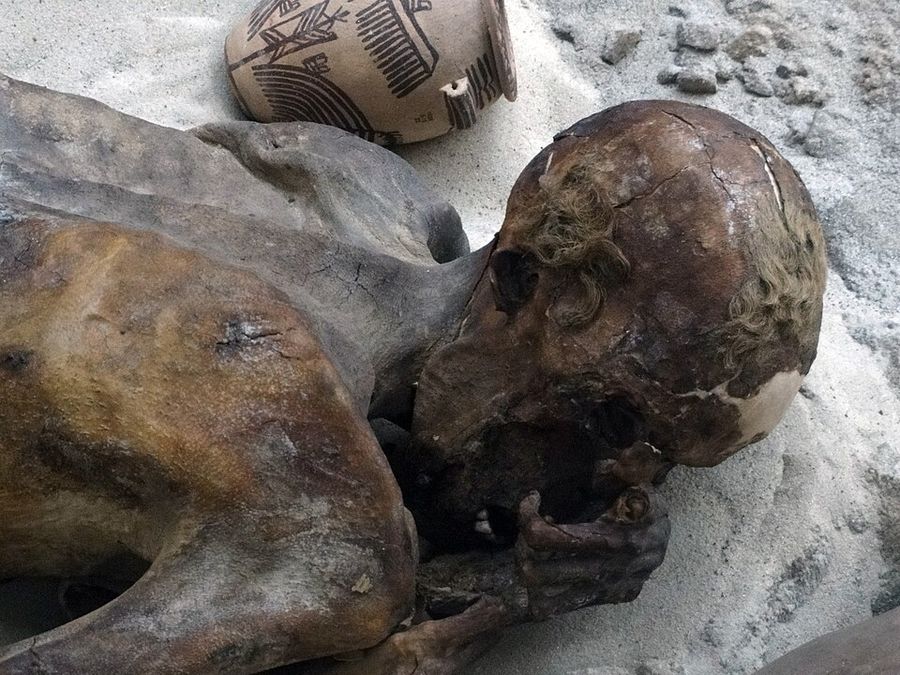
Long before pharaohs built pyramids, Egyptians buried their dead in shallow pits in the hot desert sand — and the sand did the rest, drying the body so completely that skin, hair and even tattoos survived. This young man, buried around 3400 BC near Gebelein in southern Egypt, was nicknamed 'Ginger' for his reddish hair. He has rested in the British Museum since 1901, in the same curled sleeping position in which he was buried, surrounded by the pottery vessels placed with him for the afterlife. In 2012, a CT scan let doctors 'examine' him for the first time: he was a strongly built man of about twenty, and the scan revealed the wound that killed him. He is not a king or a priest — he is an ordinary person across an almost unimaginable distance of time, and that is exactly what makes him unforgettable.
One wow fact
CT scans revealed a cut in his back and a broken rib: evidence suggests he was stabbed — one of the oldest murder cases in the world. Scans also found one of the oldest known tattoos in Africa on his arm.
More treasures at this museum
- The Rosetta Stone British Museum
- The Papyrus of Ani — the Book of the Dead British Museum
- The Parthenon Sculptures British Museum
- The Benin Bronzes British Museum
- Hoa Hakananai'a — the Easter Island Moai British Museum
- The Sutton Hoo Helmet British Museum
Same culture · Ancient Egypt
- The Rosetta Stone British Museum
- The Papyrus of Ani — the Book of the Dead British Museum
- The Gold Mask of Tutankhamun Grand Egyptian Museum
- Khufu's Solar Boat Grand Egyptian Museum
- The Bust of Nefertiti Neues Museum
- The Temple of Dendur The Metropolitan Museum of Art
Information page — not the museum's official page. Museums can claim and enrich this profile free of charge.
Artsymus is a technology platform: we never buy, sell or hold artworks. Explanations are information from recorded open-access sources — not appraisals or professional advice — and a certificate check only confirms that a record matches; it never authenticates a work.
Artsymus is a technology platform. We never buy, sell or hold artworks — artists sell, collectors buy, we provide the technology.