The Sutton Hoo Helmet
Held at British Museum · London, United Kingdom
Why everyone wants to see it
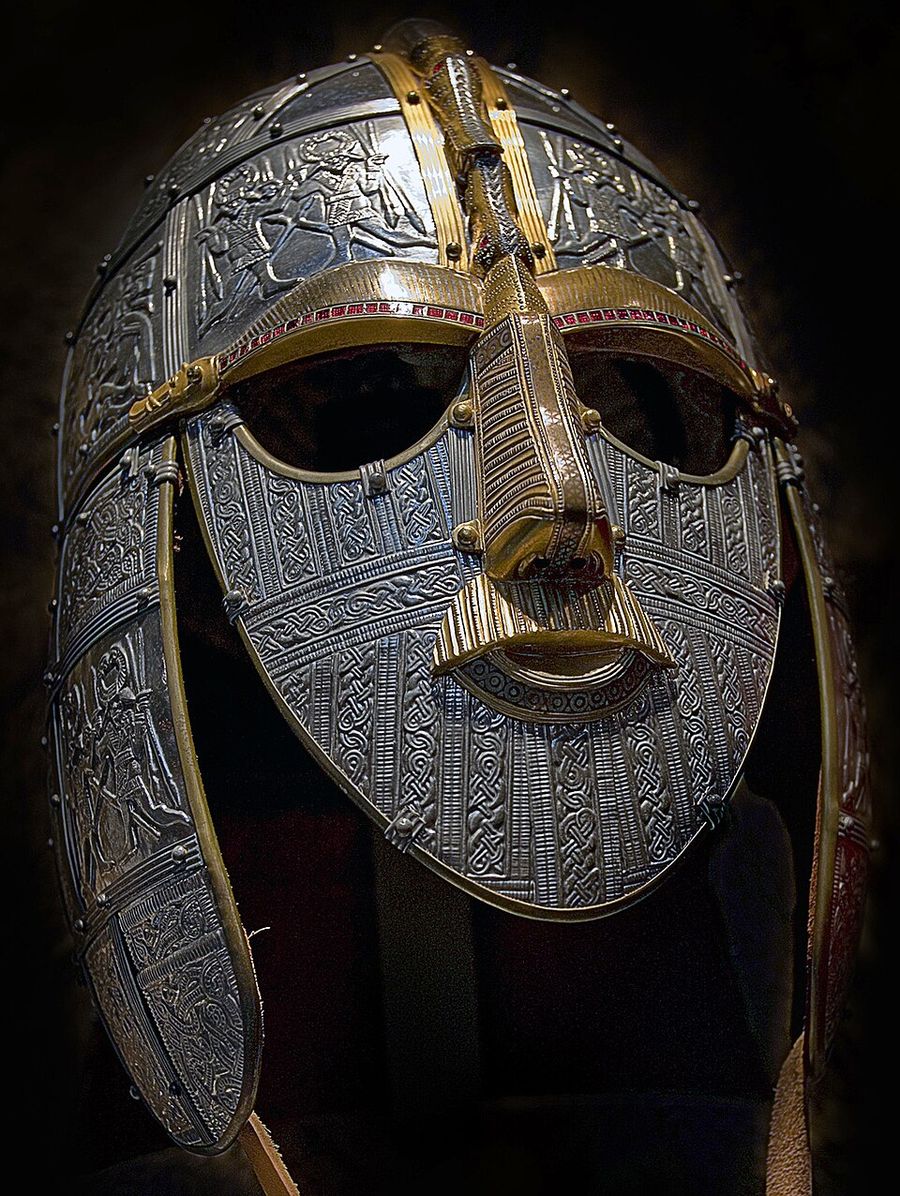
The face of the Dark Ages: a king's helmet rebuilt from more than a hundred rusted fragments.
The story
In the summer of 1939, on the eve of war, excavators at Sutton Hoo in Suffolk uncovered a 27-metre ship buried in a mound, its timbers ghosted in the sand and its treasure chamber full of gold: buckles, shoulder clasps, a great gold belt buckle, and the crushed remains of a helmet. The burial — probably of King Rædwald of East Anglia — rewrote the history of 'Dark Age' England overnight: this was a world of wealth, craft and far-flung connections. The helmet, restored twice as techniques improved (the reconstruction you see dates from 1971, after nine years of work), has become the period's face: iron cap, deep neck guard, and that extraordinary dragon-mask. The landowner, Edith Pretty, gave the entire treasure to the British Museum — still the most generous gift by a living donor in the museum's history.
One wow fact
Look at the faceplate: the eyebrows, nose and moustache form a flying dragon — the eyebrows are its wings, ending in boars' heads, the nose its body. One eyebrow has garnets, the other does not — perhaps a one-eyed god, Odin, was meant.
More treasures at this museum
- The Rosetta Stone British Museum
- The Gebelein Mummy, known as “Ginger” British Museum
- The Papyrus of Ani — the Book of the Dead British Museum
- The Parthenon Sculptures British Museum
- The Benin Bronzes British Museum
- Hoa Hakananai'a — the Easter Island Moai British Museum
Information page — not the museum's official page. Museums can claim and enrich this profile free of charge.
Artsymus is a technology platform: we never buy, sell or hold artworks. Explanations are information from recorded open-access sources — not appraisals or professional advice — and a certificate check only confirms that a record matches; it never authenticates a work.
Artsymus is a technology platform. We never buy, sell or hold artworks — artists sell, collectors buy, we provide the technology.